 |
|

|
|
||||||||||||||||||||

|
|
|
Cultural Musings on Kandinsky’s Yellow Sound
|
|
|
|
Introduction We are used to knowing plays in translation, and we also know that a lot may be “lost in translation.” In fact, in recent decades, I’ve seen the theatre shift towards abstraction, jettisoning conventional narrative. This is not only a way of making older plays new, but also a strategy for getting around the problem of language translation. Gregory Vernitsky, this month’s returning guest writer, finds that, where Kandinsky’s Yellow Sound is concerned, we are also missing cultural translation—references and associations the Russian Kandinsky himself would likely have had when writing the play in Germany in 1909. As for Russian readers, they would have to wait to enjoy these pre-revolutionary allusions until the play’s first, post-Soviet era, 1993 Russian translation. What Vernitsky has identified wouldn’t have had cultural weight for his original German readers, and they certainly haven’t made it into English. Instead, they remain mysterious and support the sense of the play’s abstraction. It’s good to know that when Kandinsky’s abstract Yellow Sound is finally produced with today’s many abstracted plays, there is another layer, a rich cultural layer, to make audiences aware of.
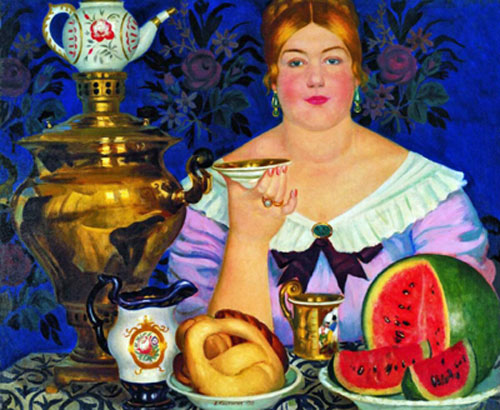
L.T. Renaud * Cultural Musings of Gregory Vernitsky The first time I dug into the mysteries surrounding the life and work of Wassily Kandinsky was after a chance chat with Dr. Lissa Tyler Renaud. Later I wrote an article about Kandinsky and the Odesa Art School for her Kandinsky Anew series: contrary to sometime scholarly and popular belief, he never went there. I was fascinated by the ways the Soviet Union’s suppressed art was remembered. I became a regular reader of Kandinsky related research, and earlier this year I came across a Kandinsky Anew article, “Kandinsky’s Theatre of Abstraction: Three Play Fragments” [see here]. I didn’t know his plays: strange, hard to make sense of. Co-authors Hahl-Fontaine and Renaud, along with offering the first English translation and re-translations of the fragments, provided context for them by way of Yellow Sound, the only one of his completed plays Kandinsky was able to publish in his lifetime. The authors concluded their piece noting a progression toward abstraction from version to version in visual and verbal languages: “We began this article with a fragment from Giants; in the Yellow Sound it evolved into, we hear a tenor voice cry out in nonsense syllables, ‘Kalasimanafakula!’ We do not know what it means, but we feel we should pay attention.” I was struck by the thought that I might know what it means. * The Russian speaker will recognize the cry “Kalasimanafakula” as the slightly scrambled “Kalachi-Manufaktura," the kind of cry quite common at markets and fairs in pre-revolutionary Russia. Kalachi (singular Kalach) is a refined white bread filled with cheese or fruits—a very common delicacy, shaped like a big donut, larger at the bottom. There is a Russian saying that only a very strong-willed person can’t be bribed with Kalach. It was a festive food, a symbol of a happy, stable life.
Painter Boris Kustodiev (1878-1927 Russian Federation).
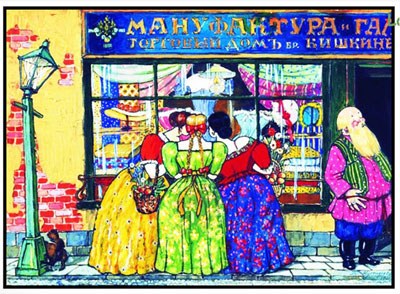
Manufactura in Russian is, of course, a general term for light industrial products, but it was also commonly used for fabric (Tkan’). Manufactura (fabric in bulk) was produced (manufactured) at a plant called Fabrica or, traditionally also known as Manufactura.
By Boris Kustodiev. The sign on this shop says Manufactura. Shop owners would hire people to call out what they were selling, along with other treats, such as candies or kalachi, to attract customers. The world of commerce wasn’t foreign to Kandinsky: his father was a director of a tea factory. As a young man he created an advertising poster for a company his father had. He visited markets and fairs in big cities such as Odesa and Moscow, and in small villages in the Russian North during an ethnographic expedition in his early years. After university graduation, he worked for a year at a manufacturing facility: “I took up the position of manager in one of the largest printing firms in Moscow. My new specialty was heliographic reproduction, which to some extent brought me into contact with art. My environment was one of working people.”
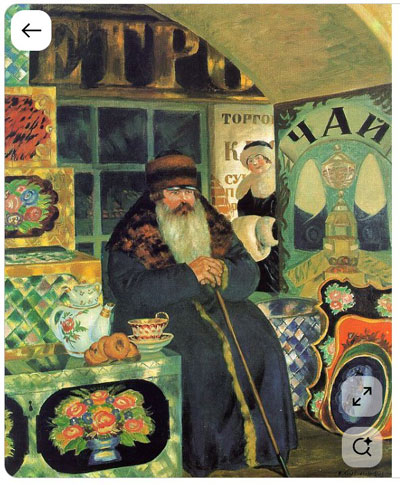
By Boris Kustodiev. The typical tea shop also
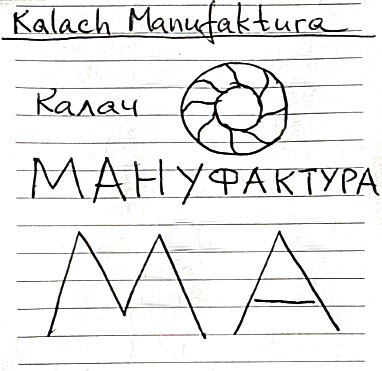
* The mystery word appears in Scene 3 of the play. After music, colored lights and giants, while the background remains black, after a long pause: Suddenly, one hears from backstage a shrill tenor voice, filled with fear, shouting entirely indistinguishable words very quickly (one can hear frequently [the letter] a: e.g., “Kalasimunafakola!”). Pause. For a moment it becomes dark. Compare Kalachimanufactura and Kalasimunafakola: We can see that to achieve a sound that was vaguely familiar yet disturbing, Kandinsky changed some of the consonants, and made every other letter a vowel. As a nonsense word, it is also reminiscent of the phrase traditionally used in Russian language theaters to create crowd noise: “Chto govorit’ kogda nechego govorit,’ meaning “what to say when there is nothing to say.” Why did Kandinsky choose the words “kalachi” and “manufactura” to combine for his example of the kind of sound he wanted in the play? The synaesthetic Kandinsky saw colors and shapes associated with sounds (thus Yellow Sound): he might have seen kalach as a yellow circle, or sun. The word Manufactura also contains the word factory: the Tryohgornaya Manufactura in Moscow was the largest fabric manufacturer in all of Russia; Tryohgornaya means Three Mountains—there will be plenty of mountains, round and triangular, in the play—and the shape of its first letters are like mountains!
Informal sketches by the author:
The Russian specifics, language, sounds and colors—pastries and bright folk clothing—were never far from Kandinsky: some of his cultural references will be remembered with nostalgia by emigrants years later, after the Revolution and Civil War, as typical of the Russia they have lost. While there are countless things we can’t know about Yellow Sound, it’s hard not to think that this shrill sound, “Kalasimunafakola,” emerged creatively from images and sounds in the real world—a world stripped of its concrete reality and transformed with spiritually charged colors and sounds: we pay attention; we look and listen. |
|
|||||
|

|
|||||||||||||||||||||||||||||||||||||||||||
|
|||||||||||||||||||||||||||||||||||||||||||


|
|||||||||||||
|
|||||||||||||

|
||||||||||||||||||||||||||||||||||||||||||||||||||||||||||||||||||||||||||||||||||||||||||||||||||||||||||||||||||||||||||||||||||||||||||||||||||||||||||||||||||||||||||||||||||||||||||||||||||||||
|
||||||||||||||||||||||||||||||||||||||||||||||||||||||||||||||||||||||||||||||||||||||||||||||||||||||||||||||||||||||||||||||||||||||||||||||||||||||||||||||||||||||||||||||||||||||||||||||||||||||


|
|
|
|