|
Of
all the pianists
I’ve written or
might write about, Elmo
Hope is likely to be truly
the most underrated due to
his obscurity relative to
other great players of his
era, composer-performers
like Bud Powell and
Thelonious Monk.
Even though I have a
fairly extensive knowledge
of jazz, in particular
so-called modern jazz, I
had not heard of Hope
until I read a remarkable
book called The Midnight Special by Colin Asher. Subtitled “The Secret Prison History of American Music,” the book examines the lives and work of several American musicians, most Black, whose careers—indeed their very existence—were compromised, shortened, or completely ended by encounters with the law and incarceration. The book deserves an essay all to itself, but I’m focusing here on Elmo Hope because of my strong interest in jazz piano and my desire to bring lesser known performers to wider recognition.
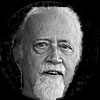
St. Elmo Sylvester Hope
was born in 1927 in New
York City. He was a
childhood friend of
Powell, with whom he
listened to and performed
music, and both became
friends with Monk in early
adulthood. In an incident
that prefigures one of the
recurring motifs of his
career, Hope was shot and
nearly paralyzed by NYC
police at the age of 17,
in what appears to have a
been a deliberate and
unprovoked assault,
presumably because he was
a Black youth running away
from a crime scene that he
had nothing to do with.
The charges were
ultimately dropped, but
Hope’s injuries
prevented him from
returning to school so,
after recovering, he began
playing professionally.
Like all too many of his
peers in jazz, Hope became
addicted to heroin, which
brought on many encounters
with the law and the
eventual loss of his New
York City cabaret card. He
spent a four-year stint on
the West Coast which he
didn’t like but
during which he enjoyed
some successful
collaborations with such
musicians as Chet Baker.
Upon returning to New
York, he continued to
perform and record but his
ongoing drug problem
prevented him from
reaching the level of
success his talent
deserved. He stopped
playing altogether in 1966
at the age of 42 and died
the following year. A
tragic loss for jazz and
its fans, his premature
death is no doubt a major
reason he has slipped into
relative obscurity. As Wikipedia (from which I have drawn much of this biographical information) puts it, “He remains little known, despite, or because of, the individuality of his playing and composing, which were complex and stressed subtlety and variation rather than the virtuosity predominant in bebop.”
But rather than dwell on
this sad state of affairs,
I’d prefer to
celebrate the life and
music of Elmo Hope with
some samples that
demonstrate his remarkable
skills as a composer and
performer. Here’s
his version of “All
the Things You Are,”
composed by Jerome Kern
and Oscar Hammerstein,
which became a standard
and was covered by such
greats as Charlie Parker,
Booker Ervin, Bill Evans,
and John Coltrane, along
with others too numerous
to mention.
https://www.opendrive.com/player/NTlfODUwNjUwNDVfWVRUd2g
Hope’s playing
here fuses the lyricism
and precision of Art Tatum
with an angularity and
jumpy rhythm that is
reminiscent of Monk.
Or consider "Mo Is On",
Hope’s own
composition in a trio
setting featuring the
great drummer Philly Jo
Jones. The speed and drive
evoke Powell but with a
clarity and assurance
characteristic of Hope
himself. Note especially
the perfect synchrony
between Hope’s piano
and Jones’ drumming.
Another trio recording, "Minor Bertha",
a Hope composition named
for his wife, also a
highly accomplished
pianist, again reflects
affinities with Powell and
Monk, but demonstrates
Hope’s command of
rhythm and harmony. As
previously, pay attention
to the perfect interplay
between piano and drums.
almost as if they were one
instrument.
Bertha joins Elmo for a
lovely duet version of
Jerome Kern’s"Yesterdays".
(Where would modern jazz
be without the work of
Jerome Kern?) Their four
hands move over the
keyboards in a symmetry
not unlike that which Elmo
so often achieved with his
drummers.
And finally, one more Hope
original (out of the many
I wish I had space to
present), "Happy Hour" is another trio featuring Jo Jones and the equally great Percy Heath on bass. Heath’s playing synchronizes perfectly with Hope and Jones, in the manner with which we have becom familiar in Hope’s work.
Despite his early death
and relative obscurity,
Hope left a vast legacy of
recordings and
performances—over a
dozen albums and
collaborations with such
giants as Coltrane, Sonny
Rollins, and Clifford
Brown.[1] As contemporary
jazz pianist Eric Reed
says, “We have a lot
of good composers in jazz
music, but there
aren't dozens of great ones.
There's one Monk,
there's one Duke
Ellington, there's one
Billy Strayhorn. And
there's one
Elmo." [2]
Notes
[1]https://www.npr.org/2023/08/17/1193962841/an-elmo-hope-centennial-celebration-giving-a-jazz-piano-pioneer-his-due
[2] Ibid.
|