|
This
interview grew out of
my wish to speak with
an art teacher in
Chiang Mai, Professor
Kraisorn Wichaikul.
I have followed his
paintings—mostly
portraits—for
more than ten years. I
also knew that he
teaches art at
Rajamangala University
of Technology Lanna.
The role of a teacher
who remains grounded in
academic training and
the foundations of art
is deeply meaningful.
Living and working in
an art city like Chiang
Mai also continually
inspires new creative
work, and some of those
answers emerge in the
conversation that
follows.
JY.
What has been your main inspiration in making art, and what
continues to motivate you to create today? This also offers a chance to talk
about your education, artistic development, and the awards you have
received.
KW.
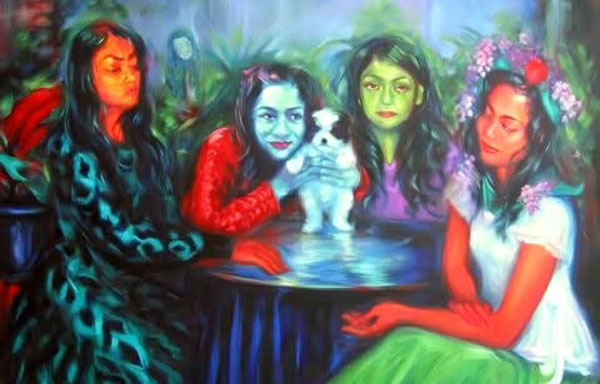
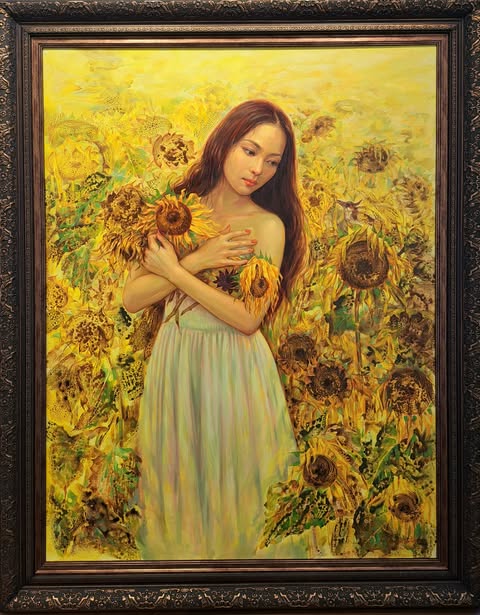
Most of my work has been inspired by stories of people and nature.
Looking back to when I first became interested in art and began my
training as a student, I focused mainly on portrait painting, with an
emphasis on human emotion and the symbolic elements composed within
the image. As a result, my paintings give particular importance to
character, posture, gesture, and expression, along with the surrounding
environment as a conceptual element that helps convey meanings related
to human life.
As an undergraduate, I studied at the Faculty of Fine Arts, Chiang Mai
University. During that period, my work was strongly influenced by
Western art history. One piece that particularly interested me was The Last
Supper by Leonardo da Vinci. I was also drawn to the use of light in
Baroque art, with its emotionally charged gestures, as well as the
brushwork of later painting that expressed both the emotional and
philosophical dimensions of the human figure.
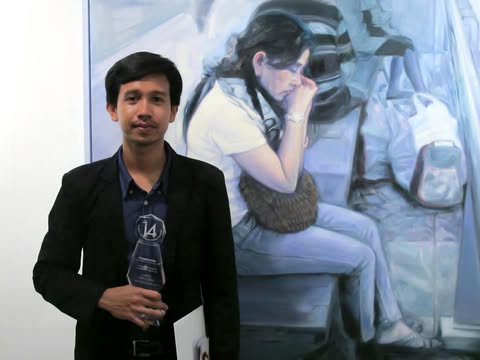
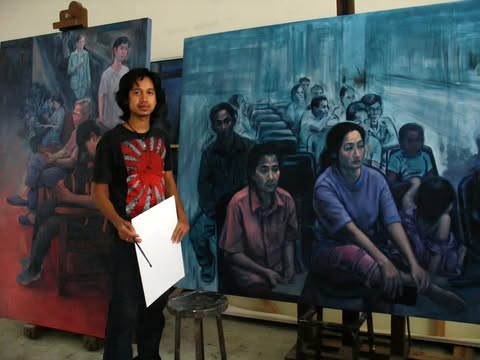
At the master’s level, I continued my studies at the Faculty of Painting,
Sculpture and Graphic Arts, Silpakorn University. During this period, my
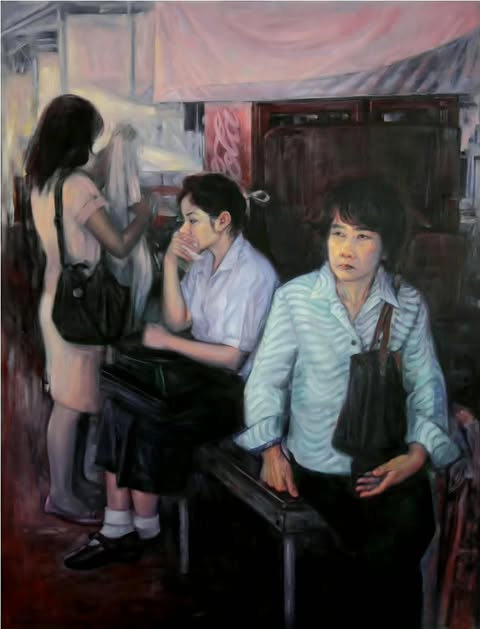
painting shifted from idealized portraiture to a more realistic approach
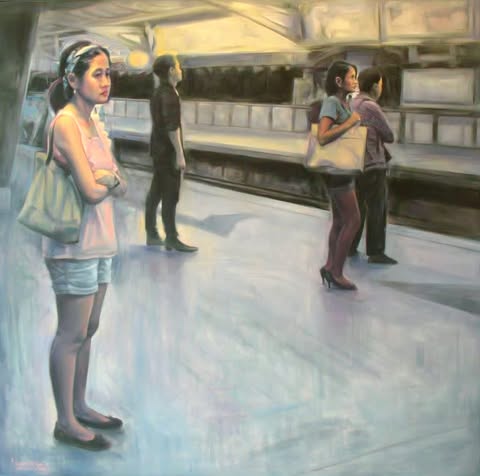
that reflected the social realities of the time. Moving from Chiang Mai to
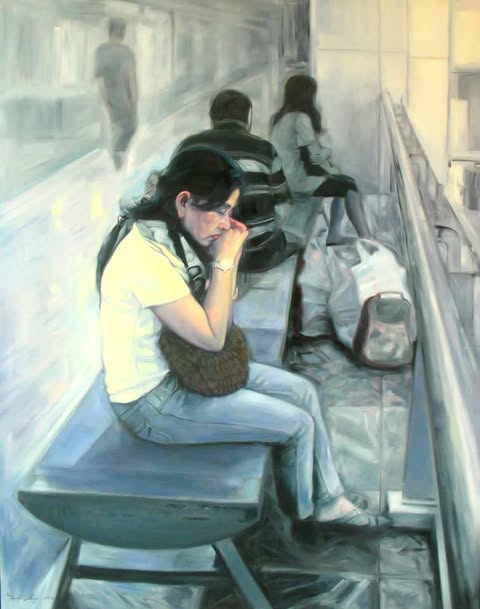
Bangkok became an important source of inspiration. The social
environment was very different from the one I had known, and it allowed
me to witness lives marked by loneliness amid the crowd. I observed
certain traits of urban society and expressed that sense of isolation through
painting. This body of work later brought me awards, including an
Outstanding Award from Panasonic and Third Prize in the UOB
competition.
As you can see, both bodies of work I have mentioned grew out of stories
about people. That shared thread continues to motivate me to create
consistently, because stories about human beings are not only outward
reflections of society, but also mirrors of our inner selves.
JY.
How has your role as an art teacher shaped your own perspective on
making art?
KW.
This was a period in my life when I returned once again to Chiang
Mai. After completing my master’s degree at Silpakorn University, I came
back to teach art at Rajamangala University of Technology Lanna. In my
role as a university lecturer, I drew inspiration from my own teachers,
who, although they were educators, continued to create distinctive work
consistently. I was fortunate to have teachers like that as role models.
When I was a student, many of my professors not only taught us, but also
led by example through their continued artistic practice. Several of them
were both teachers and National Artists. Seeing their diligence,
perseverance, and genuine commitment to art-making had a deep impact
on me, because when teachers create art as an example for students, it
builds confidence in young artists.
Another benefit of being a university lecturer is that, in addition to sharing
knowledge, we also gain new perspectives from our students. I have seen
the distinctive character of the North and the unique ideas that emerge
from it. I have also had many opportunities to exchange ideas with
students and fellow lecturers. In Northern art-education circles, many
people are both teachers and artists who continue to make work together.
This environment is highly supportive and has also encouraged me to keep
creating.
JY.
In your view, what matters most for art students today, both in terms
of skill and attitude?
KW.
In art education, I believe several elements are essential. First,
developing technical skill is fundamental for anyone who wants to create
art. Strong skills allow ideas to be expressed fully. If technical ability is
weak or incomplete, even a strong concept may fail to communicate what
the artist originally intended. That is why training in the
fundamentals—especially in the early undergraduate years—is so
important. At the same time, students should have room to express
themselves freely, particularly in thesis work. In most cases, students who
have a solid grounding in technique are able to communicate their ideas
with clarity and depth. This shows how skill supports meaningful artistic
communication. In an age of unlimited online information, ideas and
concepts are not difficult for students to find; what is more difficult is
concentration, sustained commitment, and giving enough time to their
work. Discipline and time management have therefore become major
challenges in education today. As for attitude, I believe young people today
have a strong sense of intellectual freedom and access to a wide range of
information. From a teacher’s perspective, one of the most important
qualities students should develop is the ability to analyze information
critically and understand its factual basis. This is especially important in a
time of information overload. As consumers of information, we should
verify facts carefully before presenting them or translating them into works
of art. Another important issue that should never be overlooked is morality
and professional ethics in artistic practice, along with responsibility to
oneself and to society.
JY.
What makes your art distinctive, and what would you like viewers to
notice or feel when they encounter your work? This opens the way to
discuss artistic language, technique, and meaning.
KW.
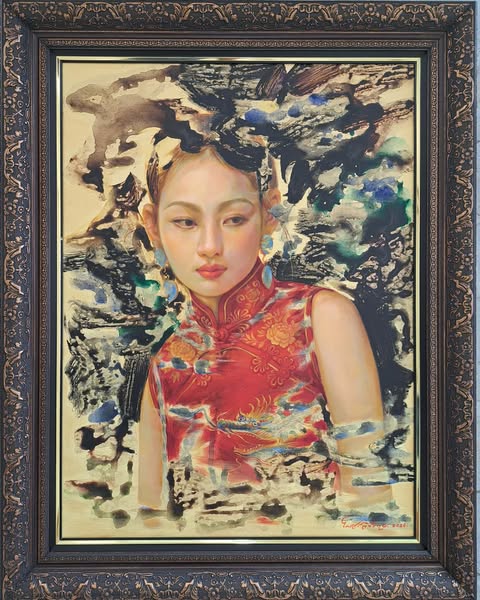
One distinctive quality of my work is that the figures convey emotion
more intensely than in conventional portraiture, and they carry meanings
that go beyond the portrait itself. Although each series may be based on
different concepts, they share a common emotional quality: the inner state
of the figure is expressed through the eyes, posture, and overall
atmosphere of color within the painting. Because I am also an art teacher,
my work falls into two broad groups: one consists of my personal creative
practice, while the other includes teaching examples such as portrait
studies, watercolor works, and landscapes. I use these both as examples for
students and as a form of relaxation for myself.
The female form in my paintings reflects beauty, femininity, and
motherhood—the source of birth and life. This also connects to the
symbolic meaning of water and rivers, which has led me to a deeper
interest in Eastern philosophy. In Eastern thought and matrilineal cultural
traditions, women are deeply respected. We can see this clearly in the
naming of sacred figures such as Mother Ganga and Mother Earth, along
with other revered feminine forms. This inspiration led me to combine the
female body with forms from nature in order to express Buddhist
teachings and the truth of the Three Characteristics. These ideas are part
of the aesthetic ideals of Eastern civilization. In terms of technique, I have
also been inspired by Chinese Zen brush painting and its direct,
spontaneous mode of expression. I bring this together with the realistic
human figure, using Western oil-painting techniques, so that it merges
with abstract empty space. The interplay between recognizable realism and
abstraction—where some parts remain visible while others dissolve into
less identifiable forms—has created a new visual language that has become
a distinctive feature of this body of work.
From a technical standpoint, I have been interested in bringing abstraction
and figuration into harmony. My work combines different techniques and
kinds of brushwork: some areas are painted realistically, while others are
left as color stains or treated in a more abstract way. This has become an
important discovery in my creative practice—allowing seemingly
incomplete areas to feel complete in the viewer’s perception. For example,
some stained areas already suggest realistic forms without needing further
rendering, while other parts still rely on deliberate brushwork. In this
series, I also changed my color palette. In the past, I rarely used gold and
black, but in this body of work I use them much more often, with the
intention of blending Western and Eastern painterly traditions more fully.
Looking ahead, my work on the theme of truth and beauty in Eastern
civilization continues to explore the beauty of women, the beauty of
nature, and truth as expressed through change, all woven together in
painting so that truth and beauty can be conveyed at the same time. I have
also been studying the influence of Chinese civilization on Lanna culture in
Chiang Mai, whether in clothing, decorative patterns, or certain belief
systems. These elements are still in an exploratory stage and will continue
to appear in my future paintings.
JY.
As an artist working in Chiang Mai, how do you see the city’s role as a
center of contemporary art, and how has it influenced your own practice?
This connects the local context to artistic creation.
KW.
Chiang Mai has rich artistic resources, both in terms of people and
places, including a substantial number of art institutions. As a result,
artistic production in Chiang Mai continues actively and consistently. In
the field of contemporary art, there is tremendous diversity. We can find
work that draws on local artistic traditions, alongside more contemporary
forms shaped by global social conditions and international art. This
diversity is one of Chiang Mai’s great strengths. As an art teacher, I see it as
a major advantage that students are able to learn from such a wide range
of artistic approaches.
Chiang Mai is home to many artists, and I feel fortunate to live and work in
such a supportive environment, surrounded by respected artists and high
-quality work. It continually inspires me to create and to take part in
artistic activities with others in the city. In terms of its influence on my
own practice, Chiang Mai is a place of natural beauty and cultural richness.
I am especially interested in the beauty of local flowers, which I combine
with the female form in my work. I am also interested in textile patterns,
cultural arts, and belief systems that can still be explored further and
expressed through painting. If I have the opportunity to continue with
another series, I know I will need to keep studying, learning, and finding
joy in both teaching art and making it.
|