|
In February 2026, I had
the opportunity to
interview Mr. Pairoj
Pichetmethakul, a Thai
artist and the lead actor
in the film *Homeless*.
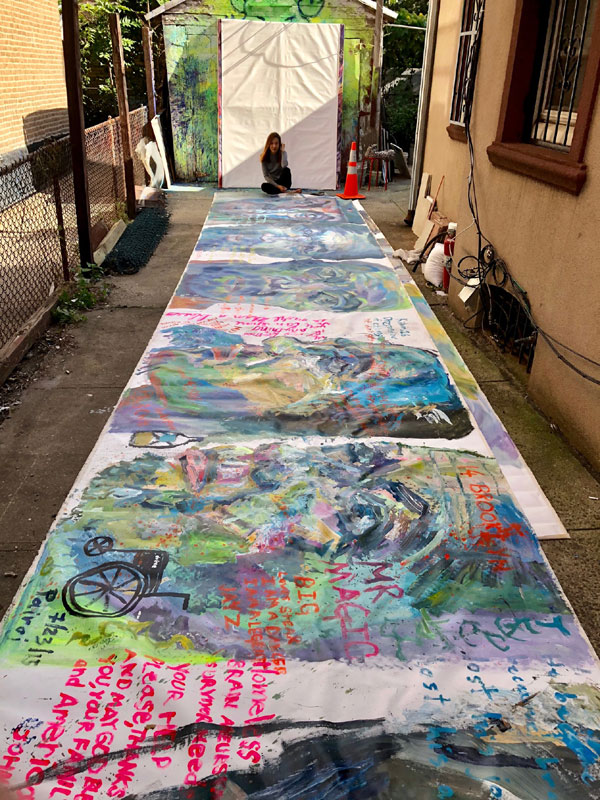
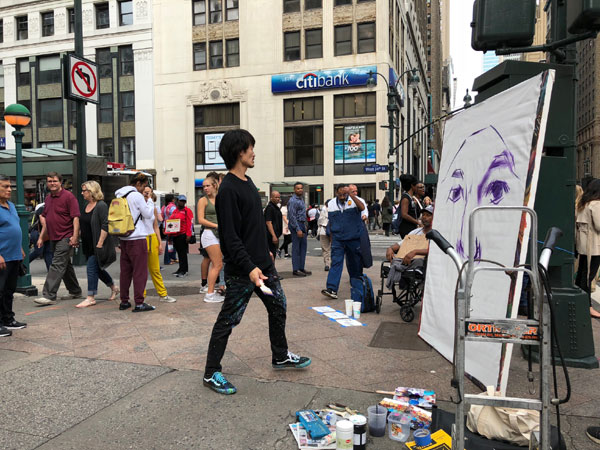
*Homeless* is a film based
on Pairoj
Pichetmethakul’s
real-life experiences
working as a portrait
artist for homeless people
in New York.
I felt honored once again to have the opportunity to get to know
Eve Jariya Moongwatana, a strong and talented female film
director. Let us learn more about her background and work.
This film project, which required more than seven years of
preparation and production, transforms recorded memories into
a documentary film that is preparing for release and submission
to international film festivals.
JY.
What was the key inspiration that led you to study film, and
how did your educational journey shape your perspective and
ideas as a film director?
JM.
I have always believed that every human being carries a story
that is valuable and worth learning from—especially those who
exist outside society’s field of vision. Ordinary people we pass by
in our everyday lives, those who seem to be nothing more than
the background of the city, in reality possess inner worlds that are
far deeper and more complex than we imagine.
From my early years in primary school, where I studied at an all
-girls school, to my secondary education at Triam Udom Suksa
School—a coeducational school that brought together students
from all over the country—I had the opportunity to live and learn
alongside people from very diverse backgrounds. This allowed me
to learn from individuals who had grown up along very different
life paths.
At university, in the Faculty of Communication Arts at
Chulalongkorn University, I was not only taught media
production or storytelling through images and sound, but also the
responsibility that comes with being part of the media. We do not
create media simply to do what we want, but to do what has
meaning for society.
The most important lesson I gained was that media can be more
than entertainment. It can be a tool that helps people see,
understand, and sometimes even leads to certain changes within
society.
JY.
During your studies, what knowledge or experiences had a
strong influence on your storytelling style and your directorial
approach in the film *Homeless*?
JM.
During my studies at the Faculty of Communication Arts,
Chulalongkorn University, especially in my third and fourth years,
I began to develop a strong interest in documentary
filmmaking—media that places deep importance on life and the
origins of things around us. I believe that the truth of life carries
its own power and intrinsic appeal.
I decided to create a documentary as my final graduation project,
and through that process I discovered that this was the form of
media I was truly passionate about and wanted to continue
pursuing in my professional life.
JY.
Before directing *Homeless*, what kind of professional
experience did you have, and how did those experiences help
prepare you for the role of a film director?
JM.
Before making this film, I worked in the media industry for
over twenty years in various roles—as a host, creative, producer,
and storyteller—across many programs, companies, and media
organizations.
These included *Kob Nok Kala* on Modern9 TV, *Kin Yoo Kue*
on Thai PBS, which is a documentary program, and later working
with new-generation media companies during the period when
online media began to replace traditional mainstream media,
such as *a day*, *The Momentum*, and *The Standard*. These
are online news platforms where I had to work seriously on news
and social issues.
All of this gave me a much deeper and more well-rounded
perspective on society and the world.
These experiences allowed me to encounter a wide range of
people—from politicians, artists, actors, executives, academics,
merchants, farmers, to freelancers of many kinds. I learned about
the diverse realities of society and also took on responsibilities in
managing teams under significant accountability.
Everything I experienced throughout my career shaped my
approach to storytelling—through visuals, sound, themes, and
content—as well as time management and resource management,
all of which were crucial in my role as a director for my first
feature film.
JY.
During the production of *Homeless*, what challenges did
you encounter that differed from what you learned in theory, and
how did you address those challenges to complete the film
successfully?
JM.
In theory, we are taught rules and grammatical structures of
media production that are defined as “good” and “standard.” But
in the real world of filmmaking—especially in this
documentary—I faced a reality where rules were difficult to
define.
I had to deal with situations full of uncertainty. Most importantly,
I had to find ways to truly access the hearts and genuine feelings
of each homeless individual.
The greatest challenge was building trust. Many homeless people
have gone through experiences that caused them to distrust
society. Therefore, the most important task was building
relationships and trust—so they would open up, allow Pok Pairoj
to paint their portraits, and share their life stories on camera.
Many times, we were rejected or had filming canceled midway.
My team and I had to constantly adjust our working methods,
adapt our storytelling, solve problems on the spot, and continue
with the belief that ultimately, everything that happens would
lead to an outcome that is meaningful and valuable for the
audience.
JY.
What are your goals or vision in submitting *Homeless* to
international film festivals, and what message do you hope the
film communicates to a global audience?
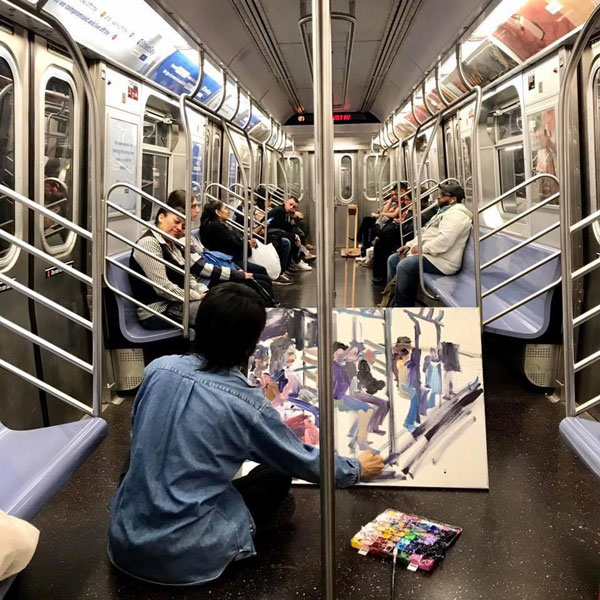
JM.
When it comes to homeless people, society often sees them
as mere shadows on the streets—marginalized individuals who
seem to have no presence.
But when Pairoj began painting them, those images gave them
presence once again.
They allow us to see them as human beings—people with pasts,
stories, dreams, and their own life paths.
For me, art is not just about aesthetic beauty; it is a tool for seeing
the world more deeply. Pairoj’s use of art as a bridge to connect
with people unseen by society allows them to see themselves
reflected once more, and allows the world to recognize their
existence. This is art that holds the power to change something
within people’s hearts.
Submitting *Homeless* to international film festivals carries a
quiet hope that the story of people without homes in one city of
the world might cause viewers on the other side of the globe to
pause and reflect on our shared humanity.
I believe that human vulnerability is a universal language. No
matter where we live, we all seek acceptance, understanding, and
the feeling that we are not invisible. In the end, the hope of this
film may not be about changing the world in a grand way, but
about someone looking at a homeless person on the street with a
different perspective—because sometimes what they need most is
not money or food, but to have someone recognize the value of
their existence. I hope this film allows the lives of these people to
travel as far as possible, into the eyes of the world.
|